Generate Public Key Windows Putty
Save the public and private keys by clicking the Save public key and Save private key buttons. From the Public key for pasting into OpenSSH authorizedkeys file field at the top of the window, copy all the text (starting with ssh-rsa ) to your clipboard by pressing Ctrl-C. How to Generate SSH Public/Private Keys on Windows By Alexandru Andrei – Posted on Sep 17, 2019 Sep 17, 2019 in Windows If you ever managed a Linux server from Windows, you probably used PuTTY or at least heard about it. PuTTYgen is a key generator tool for creating pairs of public and private SSH keys. It is one of the components of the open-source networking client PuTTY. Although originally written for Microsoft Windows operating system, it is now officially available for. May 08, 2019 To save your public key in the SSH-2 standard format, press the Save public key button in PuTTYgen. PuTTYgen will put up a dialog box asking you where to save the file. Select a directory, type in a file name, and press Save. You will then probably want to copy the public key file to your SSH server machine.
There are three main ways to generate a public key in Windows. We've tried them all with Windows 7, but given the PuTTY tools are most popular, they are documented first. Whichever method you choose, email your generated key to your designated manager and they will notify you when your account has been created. Note, if you have multiple keys because you have multiple machines, or perhaps you have different keys for different software, send them all to us - we can set you up with as many keys as you want bound to your Code Enigma account.
PuTTY
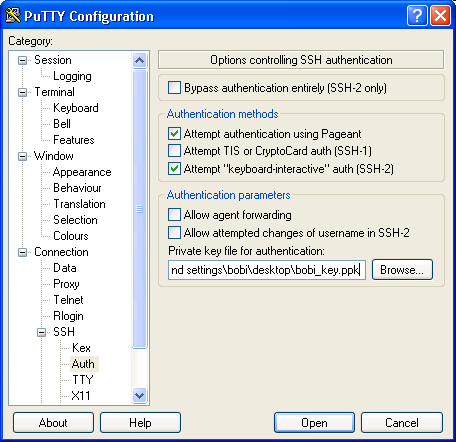
This is a Free Open Source Software (FOSS) solution for Windows that allows Windows users to generate SSH keys and use them to access Linux servers via an SSH connection.
The location of the newly generated public and private key will be shown as well as the key fingerprint. Click Go Back. Next to the Public Key you generated, click Manage Authorization then click Authorize to activate this public key. Click Go Back. To the right of the Private Key, click on View/Download. Then click the Download Key button. Save the file to your computer and click go back. Generate RSA keys with SSH by using PuTTYgen. Last updated on: 2016-06-23; Authored by: Rackspace Support; One effective way of securing SSH access to your cloud server is to use a public-private key pair. This means that a public key is placed on the server and a private key is placed on your local workstation. Using a key pair makes it. How To Use SSH on Windows PuTTY - Generate Public/Private Key Pair & File. Using a Public/Private key to authenticate when logging into SSH can provide added convenience or added security. The Public/Private key can be used in place of a password so that no username/password is required to connect to the server via SSH.
Public Key Definition
[1] Download and run the PuTTY 'Installer' from this page:
[2] Generate a private and public key pair:
- Go to the Windows Start menu -> All Programs -> PuTTY and open PuTTYgen
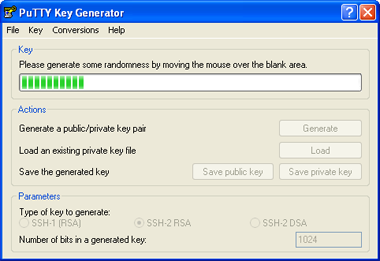
- Click the 'Generate' button and PuTTYgen will ask you to make some random movement with your mouse until it has enough random data to generate a secure key for you
- Click the 'Save private key' button and save the resulting file somewhere safe and only accessible by you!
[3] Export Public key to the Linux server:
In the grey box at the top, entitled 'Public key for pasting into OpenSSH authorized_keys file', there will be a string of nonsense. Copy all of this string into an email and send it to us, as per the opening instruction on this page.
That's it, you're done!
Git Bash
This is a light-weight terminal client for using Git from the command line on Windows. It's a sort of scaled down version of CygWin, and one of the nice things about it is it permits normal 'Terminal' access to Linux servers.
[1] Download and run the latest version from this page:
The installer will open msysGit when it completes, follow the instruction to create a shortcut:
[2] Generate a private and public key pair:
Pgp Key
Follow steps 1 and 2 of the GitHub instructions found here:
At step 3, use the 'clip' command as instructed, but paste the result into an email and send it.
Bitvise
If none of the above works, there's also Bitvise, which is not FOSS, but is freely available for personal use, and even individual use within an organisation, so it's a good and legal option.
[1] Download the Bitvise SSH client software:
[2] Generate a private and public key pair:
- click the link titled 'User keypair manager' in the Login tab;
- click the button [Generate New ..];
- choose ssh-rsa and 1024bits;
- you can enter passphrase or leave it empty
- click the button [Generate]
This passphrase is not sent to the remote host, and it is only used to protect your private key. Otherwise, anyone who has access to your private key can authenticate to your account automatically.
[3] Export Public key to the Linux server:
- Go to the 'User keypair manager';
- click the keypair in the slots;
- click the button [Export];
- chose 'Export public key' and 'OpenSSH format';
- click the button [Export];
The result should look something like:
Email just this public part to Code Enigma, as per instructions.
On Windows, you can create SSH keys in many ways. This document explains how to use two SSH applications, PuTTY and Git Bash.
Joyent recommends RSA keys because the node-manta CLI programs work with RSA keys both locally and with the ssh agent. DSA keys will work only if the private key is on the same system as the CLI, and not password-protected.
PuTTY
PuTTY is an SSH client for Windows. You can use PuTTY to generate SSH keys. PuTTY is a free open-source terminal emulator that functions much like the Terminal application in macOS in a Windows environment. This section shows you how to manually generate and upload an SSH key when working with PuTTY in the Windows environment.
About PuTTY
PuTTY is an SSH client for Windows that you will use to generate your SSH keys. You can download PuTTY from www.chiark.greenend.org.uk.
When you install the PuTTY client, you also install the PuTTYgen utility. PuTTYgen is what you will use to generate your SSH key for a Windows VM.
| This page gives you basic information about using PuTTY and PuTTYgen to log in to your provisioned machine. For more information on PuTTY, see the PuTTY documentation |
|---|
Generating an SSH key
To generate an SSH key with PuTTYgen, follow these steps:
- Open the PuTTYgen program.
- For Type of key to generate, select SSH-2 RSA.
- Click the Generate button.
- Move your mouse in the area below the progress bar. When the progress bar is full, PuTTYgen generates your key pair.
- Type a passphrase in the Key passphrase field. Type the same passphrase in the Confirm passphrase field. You can use a key without a passphrase, but this is not recommended.
- Click the Save private key button to save the private key. You must save the private key. You will need it to connect to your machine.
- Right-click in the text field labeled Public key for pasting into OpenSSH authorized_keys file and choose Select All.
- Right-click again in the same text field and choose Copy.
Importing your SSH key
Now you must import the copied SSH key to the portal.
- After you copy the SSH key to the clipboard, return to your account page.
- Choose to Import Public Key and paste your SSH key into the Public Key field.
- In the Key Name field, provide a name for the key. Note: although providing a key name is optional, it is a best practice for ease of managing multiple SSH keys.
- Add the key. It will now appear in your table of keys under SSH.
PuTTY and OpenSSH use different formats of public SSH keys. If the text you pasted in the SSH Key starts with —— BEGIN SSH2 PUBLIC KEY, it is in the wrong format. Be sure to follow the instructions carefully. Your key should start with ssh-rsa AAAA…. Office 360 product key generator.
Once you upload your SSH key to the portal, you can connect to your virtual machine from Windows through a PuTTY session.
Git Bash
The Git installation package comes with SSH. Using Git Bash, which is the Git command line tool, you can generate SSH key pairs. Git Bash has an SSH client that enables you to connect to and interact with Triton containers on Windows.
To install Git:
- (Download and initiate the Git installer](https://git-scm.com/download/win).
- When prompted, accept the default components by clicking Next.
- Choose the default text editor. If you have Notepad++ installed, select Notepad++ and click Next.
- Select to Use Git from the Windows Command Prompt and click Next.
- Select to Use OpenSSL library and click Next.
- Select to Checkout Windows-style, commit Unix-style line endings and click Next.
- Select to Use MinTTY (The default terminal of mYSYS2) and click Next.
- Accept the default extra option configuration by clicking Install.
When the installation completes, you may need to restart Windows.
Launching GitBash
To open Git Bash, we recommend launching the application from the Windows command prompt:
- In Windows, press Start+R to launch the Run dialog.
- Type
C:Program FilesGitbinbash.exeand press Enter.
Generate Public Key Windows Putty Free
Generating SSH keys
First, create the SSH directory and then generate the SSH key pair.
One assumption is that the Windows profile you are using is set up with administrative privileges. Given this, you will be creating the SSH directory at the root of your profile, for example:
- At the Git Bash command line, change into your root directory and type.
Change into the .ssh directory
C:Usersjoetest.ssh- To create the keys, type:
Generate Public Key With Putty
- When prompted for a password, type apassword to complete the process. When finished, the output looks similar to:
Uploading an SSH key
To upload the public SSH key to your Triton account:
- Open Triton Service portal, select Account to open the Account Summary page.
- From the SSH section, select Import Public Key.
- Enter a Key Name. Although naming a key is optional, labels are a best practice for managing multiple SSH keys.
- Add your public SSH key.
When Triton finishes the adding or uploading process, the public SSH key appears in the list of SSH keys.
What are my next steps?
- Adding SSH keys to agent.
- Set up the Triton CLI and CloudAPI on Windows.
- Set up the Triton CLI and CloudAPI.
- Create an instance in the Triton Service Portal.
- Set up the
triton-dockercommand line tool. - Visit PuTTYgen to learn more about the PuTTYgen and to seethe complete installation and usage guide.