Aws Ec2 Generating Key Pair
Several tools exist to generate SSH public/private key pairs. The following sections show how to generate an SSH key pair on UNIX, UNIX-like and Windows platforms.
Generating an SSH Key Pair on UNIX and UNIX-Like Platforms Using the ssh-keygen Utility

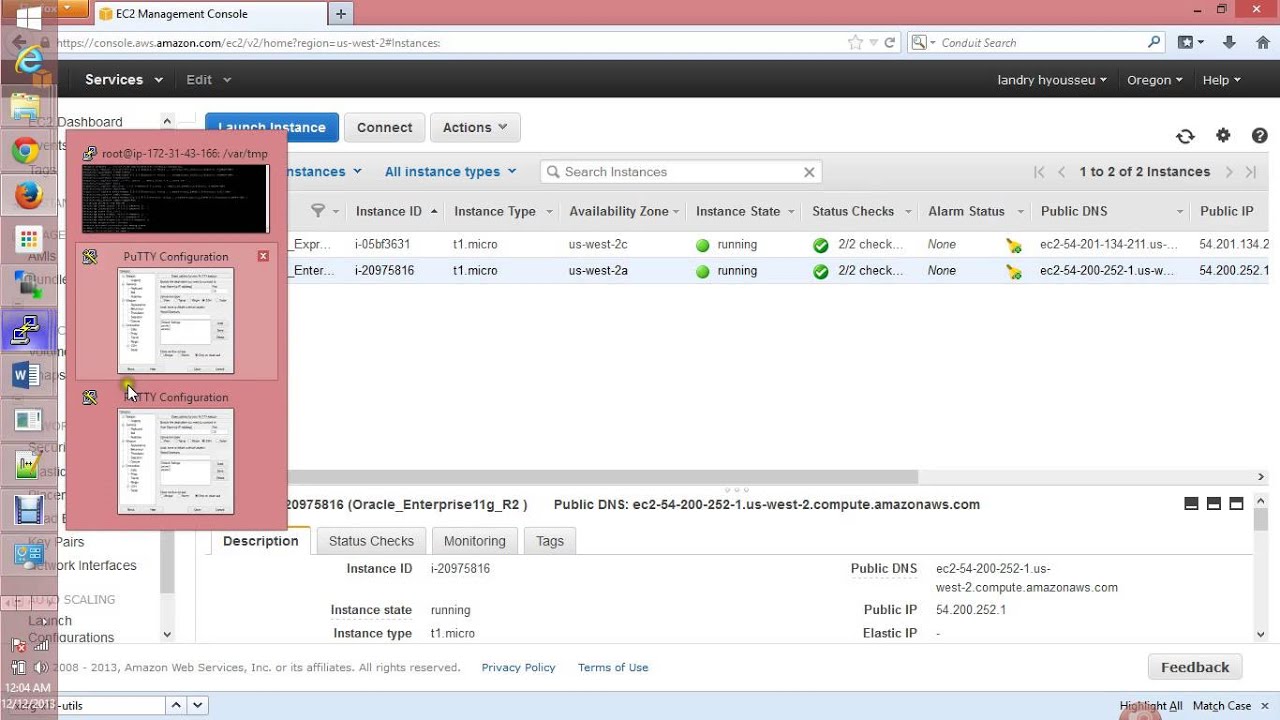
I recall that I can download the private key of my ec2 instance on the key-pairs options on ec2-window. But now you can not do it any more, where can I download my stored private key? Articles and tools covering Amazon Web Services (AWS), including S3, EC2, SQS, RDS, DynamoDB, IAM, CloudFormation, Route 53, CloudFront, Lambda, VPC. Provides an EC2 key pair resource. A key pair is used to control login access to EC2 instances. Currently this resource requires an existing user-supplied key pair. This key pair's public key will be registered with AWS to allow logging-in to EC2 instances. When importing an existing key pair the public key material may be in any format. Dec 11, 2013 In this tutorial I went through how to create key pairs from amazon AWS. I also generate private key pair using putty for our connection to the instance. Generating Key pairs from amazon ec2. Amazon EC2 doesn't keep a copy of your private key; therefore, if you lose a private key, there is no way to recover it. If you lose the private key for an instance store-backed instance, you can't access the instance; you should terminate the instance and launch another instance using a new key pair. How to create an AWS access key for an existing IAM user. In the video on the right, Deren shows you how to create an access key ID for a new IAM user. I need an AWS access key to allow a program, script, or developer to have programmatic access to the resources on my AWS account. How do I create a new access key?
UNIX and UNIX-like platforms (including Solaris and Linux) include the ssh-keygen utility to generate SSH key pairs.
If you need an EC2 Key Pair, see Creating a Key Pair Using Amazon EC2. Retrieve your initial administrator password by using the EC2 console: Open the Amazon EC2 console, and then choose Instances. Select the instance, choose Actions, and then choose Get Windows Password. Note: It can take a few minutes for this option to be available after. Generating a Secure Shell (SSH) Public/Private Key Pair Several tools exist to generate SSH public/private key pairs. The following sections show how to generate an SSH key pair on UNIX, UNIX-like and Windows platforms.
- Navigate to your home directory:
- Run the ssh-keygen utility, providing as
filenameyour choice of file name for the private key:The ssh-keygen utility prompts you for a passphrase for the private key.
- Enter a passphrase for the private key, or press Enter to create a private key without a passphrase:
Note: Left for dead 2 cd key generator v1 2.
While a passphrase is not required, you should specify one as a security measure to protect the private key from unauthorized use. When you specify a passphrase, a user must enter the passphrase every time the private key is used.
The ssh-keygen utility prompts you to enter the passphrase again.
- Enter the passphrase again, or press Enter again to continue creating a private key without a passphrase:
- The ssh-keygen utility displays a message indicating that the private key has been saved as
filenameand the public key has been saved asfilename.pub. It also displays information about the key fingerprint and randomart image.
Generating an SSH Key Pair on Windows Using the PuTTYgen Program
The PuTTYgen program is part of PuTTY, an open source networking client for the Windows platform.
Ec2 Generate Key Pair
Aws Ec2 Create Key Pair
- Download and install PuTTY or PuTTYgen.
To download PuTTY or PuTTYgen, go to http://www.putty.org/ and click the You can download PuTTY here link.
- Run the PuTTYgen program.
- Set the Type of key to generate option to SSH-2 RSA.
- In the Number of bits in a generated key box, enter 2048.
- Click Generate to generate a public/private key pair.
As the key is being generated, move the mouse around the blank area as directed.
- (Optional) Enter a passphrase for the private key in the Key passphrase box and reenter it in the Confirm passphrase box.
Note:
While a passphrase is not required, you should specify one as a security measure to protect the private key from unauthorized use. When you specify a passphrase, a user must enter the passphrase every time the private key is used.
- Click Save private key to save the private key to a file. To adhere to file-naming conventions, you should give the private key file an extension of
.ppk(PuTTY private key).Note:
The.ppkfile extension indicates that the private key is in PuTTY's proprietary format. You must use a key of this format when using PuTTY as your SSH client. It cannot be used with other SSH client tools. Refer to the PuTTY documentation to convert a private key in this format to a different format. - Select all of the characters in the Public key for pasting into OpenSSH authorized_keys file box.
Make sure you select all the characters, not just the ones you can see in the narrow window. If a scroll bar is next to the characters, you aren't seeing all the characters.
- Right-click somewhere in the selected text and select Copy from the menu.
- Open a text editor and paste the characters, just as you copied them. Start at the first character in the text editor, and do not insert any line breaks.
- Save the text file in the same folder where you saved the private key, using the
.pubextension to indicate that the file contains a public key. - If you or others are going to use an SSH client that requires the OpenSSH format for private keys (such as the
sshutility on Linux), export the private key:- On the Conversions menu, choose Export OpenSSH key.
- Save the private key in OpenSSH format in the same folder where you saved the private key in
.ppkformat, using an extension such as.opensshto indicate the file's content.